Dwayne Chism, Ed D.
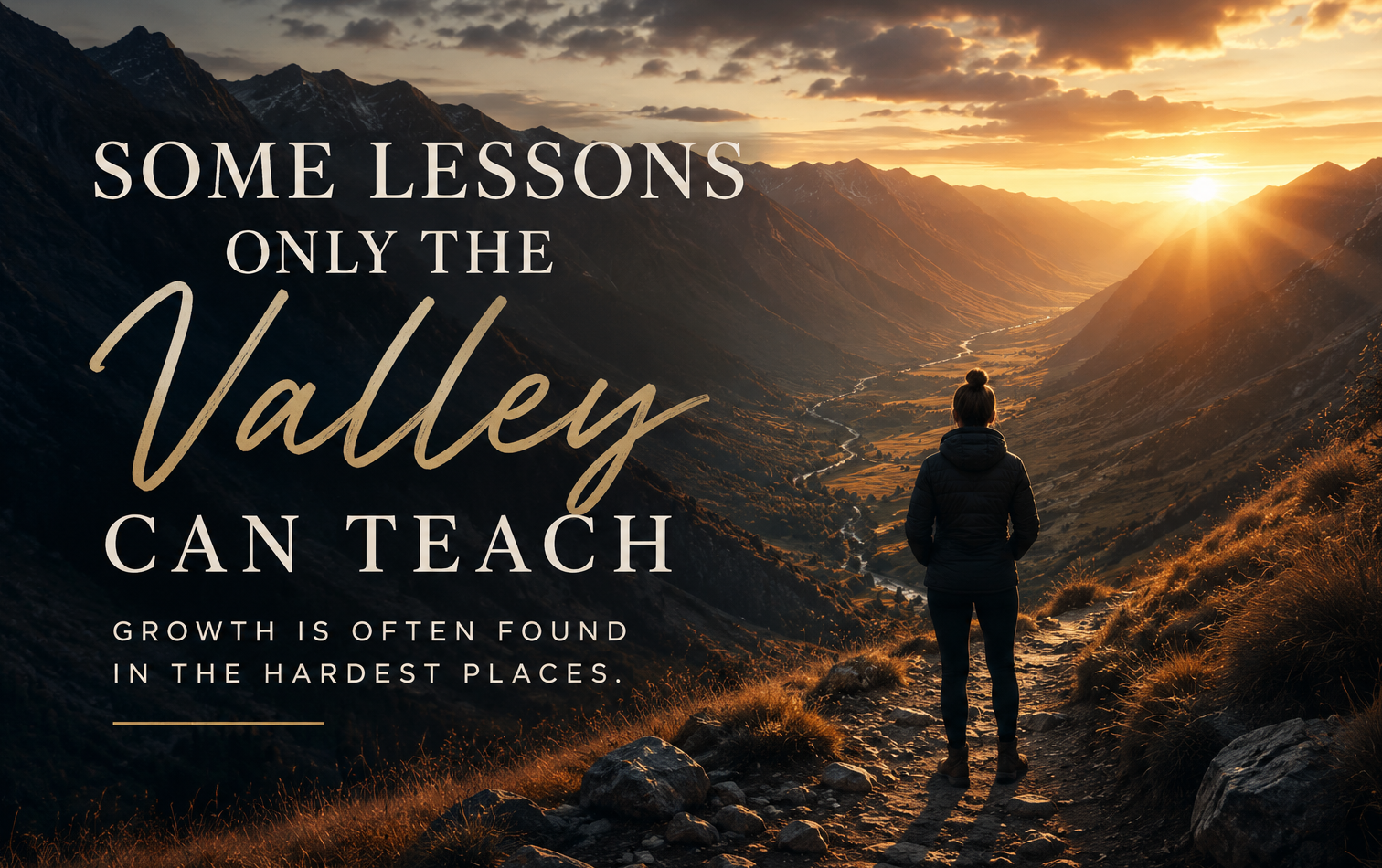
I remember many times in leadership when, met with stressful situations, I wished things would hurry up and get better or simply go away. In my first year as a principal, I must have quit my job over 30 times in my mind. Looking back on my journey now, I have come to understand that there is a purpose for the valley; a purpose filled with lessons we often cannot learn any other way. Some of the most meaningful growth in leadership does not happen on the mountaintop when everything is going well. It happens in moments of uncertainty, pressure, disappointment, and exhaustion. The valley teaches patience when we want immediate results. It teaches humility when we think we should have all the answers. It teaches empathy because struggle changes the way we see other people.
What makes the valley difficult is that we usually cannot see the growth while we are in it. Most of us want clarity before we move forward. We want reassurance that things will work out. But leadership rarely works that way. Sometimes growth looks like surviving a difficult season without giving up. Sometimes it looks like learning how to remain steady while everything around you feels uncertain. Sometimes it’s about learning what path you will never go down again.
The valley is not meant to go around; it is meant for us to go through. Too often, we try to escape the valley as quickly as possible without asking what it may be trying to teach us. You see for me, the valley developed resilience. It sharpened perspective. It forced reflection. It reminded me that leadership is not about perfection — it is about growth and remaining committed even when the path feels difficult.
Valleys have a way of refining us. They slow us down long enough to examine our priorities, our mindset, and our purpose. They reveal strengths we did not know we possessed and expose areas where we still need to grow. The reality is that every leader will face valleys. Challenges are not evidence that you are failing. The goal is not to avoid difficult seasons altogether. The goal is to walk through them without losing yourself in the process. Sometimes the valley is where vision becomes clearer. Sometimes it is where character is strengthened. And sometimes it is where we finally learn that leadership is less about control and more about trust, endurance, and growth.
I have come to understand this:
The valley did not arrive to destroy me; it arrived to develop the leader I was becoming.